
Polki jewellery. It traditional form of Indian jewellery known for its raw, uncut diamonds and royal appearance. The modern diamonds, Polki stones are perfectly symmetrical shapes. Their natural look gives Its a unique charm and a rich, traditional feel.
That jewellery, generations, especially for weddings, festivals, and other special occasions. It jewellery designed with gold, uncut diamonds, colourful gemstones, and detailed craftsmanship. From Polki necklaces and earrings to bangles and maang tikas, there are many styles available today.
One of the main reasons women love Polki jewellery is its ability to combine traditional Indian beauty with a luxurious look. Whether you wear a bridal lehenga, saree, or Anarkali suit, a beautiful Polki piece can instantly make the outfit look more elegant.
The Origin and History of Polki Jewellery
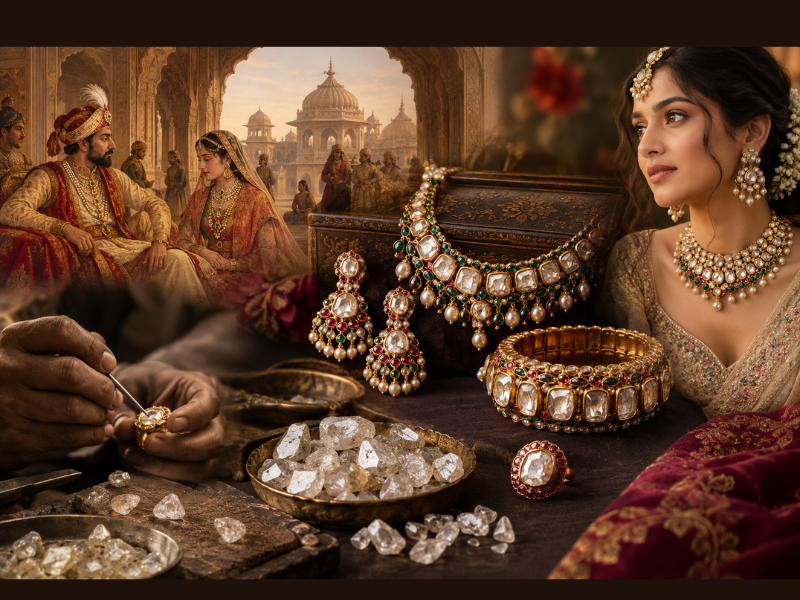
The long history of these ornaments in India and connected the royal jewellery traditions of Rajasthan and Mughal era. The art of using uncut diamonds became especially popular among royal families and wealthy communities.
Mughal influence played an important role in the development of Traditional Indian jewellery. Over time, Indian artisans combined Mughal-inspired designs with traditional Rajasthani craftsmanship to create elaborate jewellery pieces.
Polki became particularly associated with royal families because of its use of gold, precious stones, and uncut diamonds. It created detailed patterns inspired by flowers, leaves, nature, and traditional Indian motifs.
Even today, Polki jewellery continues to carry this royal influence. While traditional designs remain popular, modern royal designers have introduced lighter and more contemporary Polki pieces for women who want something elegant without an overly heavy look.
Polki Jewellery Made Process
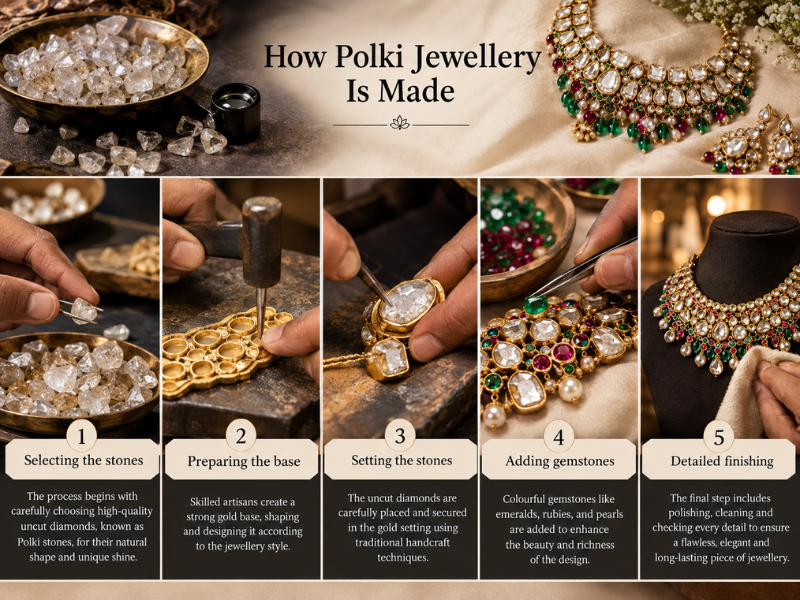
The making of Polki jewellery requires skilled craftsmanship and careful attention to detail. The most important feature is the use of uncut, natural-looking diamonds.
Unlike conventional Diamond jewellery, artisan do not these ornaments stones into precise. Instead, they retain much of their natural form, which gives each stone a slightly different appearance.
A basic basic handcraft-making process may include:
1. Selecting the stones:
Artisans carefully select suitable uncut diamonds and other gemstones.
2. Preparing the base:
Artisans create a gold or metal frame based on the design.
3. Setting the stones:
Jewellers carefully place the Polki stones into the frame.
4. Adding gemstones:
Artisans often add Coloured stones like emeralds, rubies, or pearls for contrast.
5. Detailed finishing:
Artisans complete the piece with intricate detailing and polishing.
Traditional craft pieces can take considerable time to make because much of the work involves detailed hand craftsmanship.
Polki vs. Diamond Jewellery: What’s the Difference?
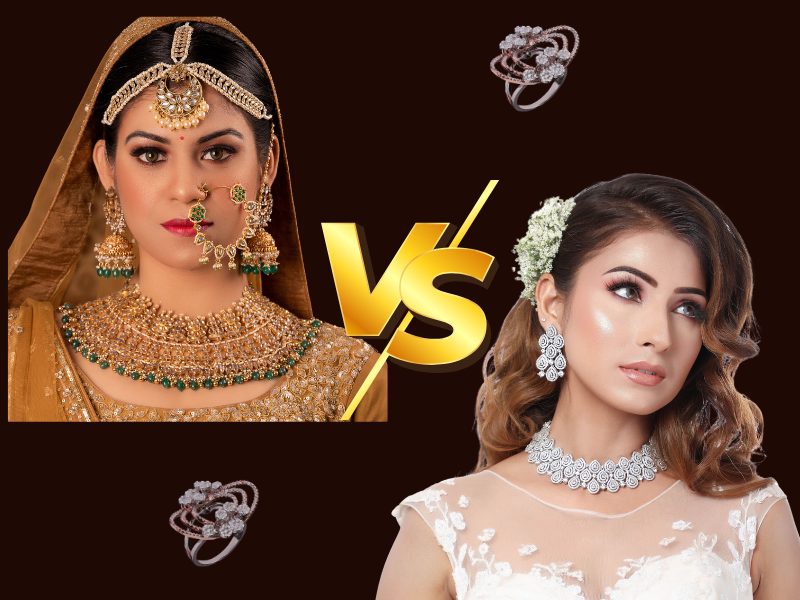
Although both Polki and diamond jewellery use diamonds, they are quite different in appearance, craftsmanship, and overall style.
| Feature | Polki Jewellery | Diamond Jewellery |
| Stone | Mostly uncut diamonds | Usually cut and polished diamonds |
| Appearance | Natural and traditional | Bright and sparkling |
| Shape | Irregular or natural-looking | Precise and symmetrical |
| Style | Royal and ethnic | Modern and elegant |
| Craftsmanship | Often involves traditional techniques | Usually uses modern diamond-setting methods |
| Best suited for | Weddings, festivals and traditional outfits | Everyday wear and special occasions |
Artison polished diamond specifically to reflect light and create maximum brilliance. Polki, on the other hand, gets its beauty from the natural character of the stone.
If you prefer a traditional and royal Indian look, Polki may be a better choice. If you want strong sparkle and a contemporary appearance, conventional diamond jewellery may suit you better.
Types of Polki Jewellery Settings
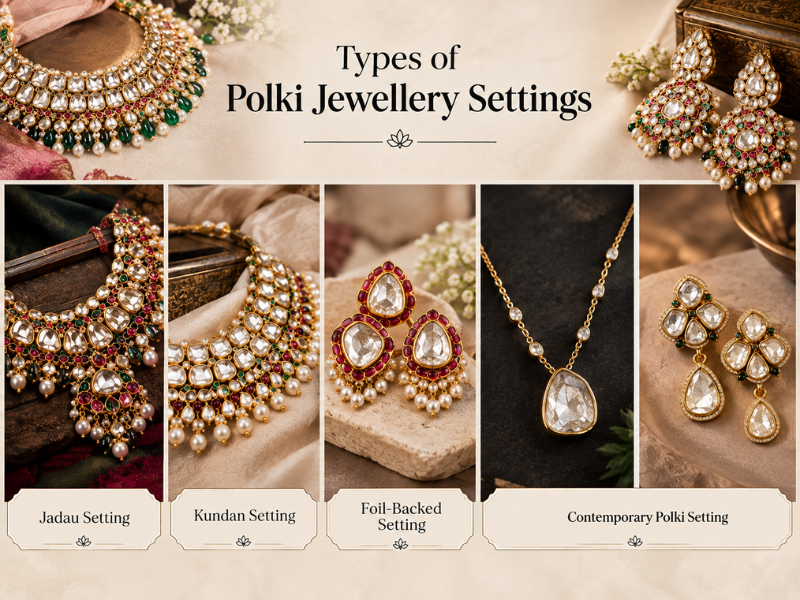
Polki jewellery created different traditional settings. Artisans craft these designs in various traditional styles. Their technique shapes how the stone placed and how the finished jewellery looks.
Jadau Setting
Jadau is a traditional technique where artisans embed precious stones into a gold base. in which precious stones are embed into a gold base. They often use this craft stones in Jadau jewellery to create elaborate bridal designs.
Kundan Setting
Kundan involves carefully setting stones into a metal framework, traditionally using highly refined gold foil. Polki and Kundan styles can sometimes look similar, but their stone-setting techniques are different.
Foil-Backed Setting
Traditional Polki pieces may use a foil backing behind the stone. The backing can help reflect light through the stone and enhance its appearance.
Contemporary Polki Setting
Modern designers also create traditional Indian jewellery using lighter settings and simpler patterns. These designs are suitable for women who want the beauty of Polki without a heavily traditional appearance.
Polki vs Kundan vs Jadau
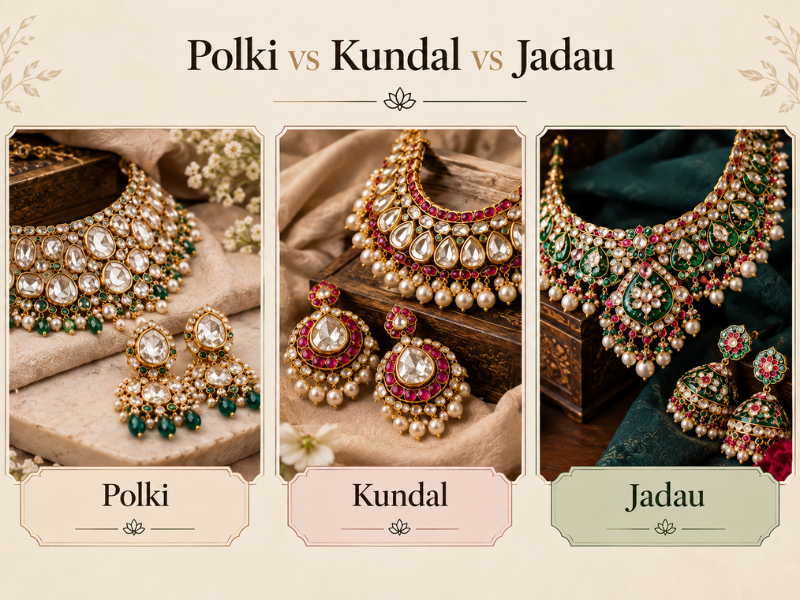
People often confuse Polki, Kundan, and Jadau because all three belong to traditional Indian design However, they are not exactly the same.
Polki:
Traditional craft pieces mainly refers to jewellery featuring uncut or minimally processed diamonds. Its natural-looking stones give the jewellery a distinctive traditional appearance.
Kundan:
Kundan refers primarily to a traditional stone-setting technique. Artisans commonly use this technique in elaborate Indian design, incorporating various types of gemstones.
Jadau:
Jadau is a traditional method of embedding stones into a gold base. This technique is strongly connects to royal bridal jewellery design.
In simple terms, Polki describes the stone itself. Kundan and Jadau refer to setting techniques. There fore, these terms often overlap in the market.
How to Identify Authentic Polki Jewellery
Buying Vintage bridal sets is a big investment, therefore buyers must understand the product first. since people use the term loosely, cheking authenticity is essential.
Check the Stone
Traditional Polki uses uncut or minimally processed diamonds. The stones generally have a natural and less uniform appearance rather than the precise shape of a modern brilliant-cut diamond.
Ask About the Materials
Ask the jeweller about the metal, diamonds, gemstones, and setting technique used in the piece. A trustworthy seller should be able to provide clear information.
Check the Gold Purity
If the jewellery is made with gold, check its purity and hallmark information. In India, a BIS hallmark can help verify the declared gold purity.
Look at the Craftsmanship
Traditional Polki jewellery is known for detailed workmanship. Examine the stone settings, finishing, back of the jewellery, and overall construction.
Buy From a Trusted Jeweller
Always purchase valuable this craft from a reputable jeweller who provides proper product details, billing, and relevant certification.
Most importantly, don’t judge authenticity only by appearance. Ask for documentation and understand exactly what materials and techniques have been used.
How to Care for Polki Jewellery
Hand crafted stone sets needs proper care because its uncut diamonds, gold settings, and other gemstones can be delicate. Good storage and gentle handling can help maintain its beauty for years.
Here are some simple care tips:
- Keep these ornaments away from perfumes, sprays, creams, and harsh chemicals.
- Remove your jewellery before bathing, swimming, or exercising.
- Wipe it gently with a soft, dry cloth after wearing it.
- Store each piece separately to prevent scratches.
- Keep it inside a soft-lined jewellery box or pouch.
- Avoid exposing it to excessive moisture.
- Do not use strong household jewellery cleaners unless they are specifically recommended for your piece.
- Have valuable or antique Polki jewellery checked and cleaned by a professional jeweller when needed.
With the right care, your Polki jewellery can remain a beautiful part of your ornaments collection for many years.
FAQs
Is Polki jewellery made with real diamonds?
Traditional Polki jewellery is made using uncut or minimally processed natural diamonds. However, jewellery sold as “Polki” can vary, so always check the product description and certification before buying.
Is Polki jewellery good for weddings?
Yes. Polki jewellery is particularly popular for Indian weddings because of its traditional, royal appearance. Polki necklaces, earrings, maang tikas, and bangles can beautifully complement bridal outfits.
Is Polki jewellery more expensive than diamond jewellery?
The price depends on several factors, including the quality and quantity of diamonds, gold purity, craftsmanship, gemstones, and design. Therefore, Polki jewellery is not automatically more or less expensive than conventional diamond sets.
Can Polki jewellery be worn with a saree?
Absolutely. Polki jewellery looks beautiful with sarees, lehengas, Anarkali suits, and other ethnic outfits. A Polki necklace or pair of earrings can add a traditional touch without requiring a very elaborate outfit.
What is the difference between Polki and Kundan jewellery?
Polki generally refers to jewellery made with uncut diamonds, while Kundan is primarily associated with a traditional stone-setting technique. Some jewellery pieces can combine elements of both styles.
Can Polki jewellery be worn every day?
Polki jewellery is generally more suited to special occasions, especially detailed or bridal pieces. However, lightweight Polki-inspired earrings, pendants, and smaller designs can be styled for occasional everyday wear.
How should Polki jewellery be stored?
Store Polki jewellery separately in a soft pouch or lined jewellery box. Keep it away from moisture, perfumes, cosmetics, and other jewellery that could scratch its surface.
Why is Polki jewellery popular among brides?
Vintage bride sets gives brides a rich and traditional appearance. Its uncut diamond look, detailed craftsmanship, and royal-inspired designs make it especially suitable for bridal lehengas and sarees.