
Kundan jewellery is one of the most beautiful and traditional forms of Indian jewellery. The Ornaments detailed craftsmanship, colourful gemstones, and elegant gold setting, and Ornaments has loved women for generations. It is especially popular for weddings, festivals, traditional celebrations, and other special occasions.
The Kundan word refers to a traditional jewellery-making technique shaped gemstones set into a metal base using layers of refined gold. The result is a rich and detailed design that gives Kundan jewellery its distinctive royal appearance.
From bridal necklaces and earrings to bangles and maang tikas, Royal ornaments comes in many designs. While traditional styles remain popular, modern designers are also creating lightweight and contemporary pieces for women who want to combine Indian heritage with modern fashion.
The History of Kundan Jewellery
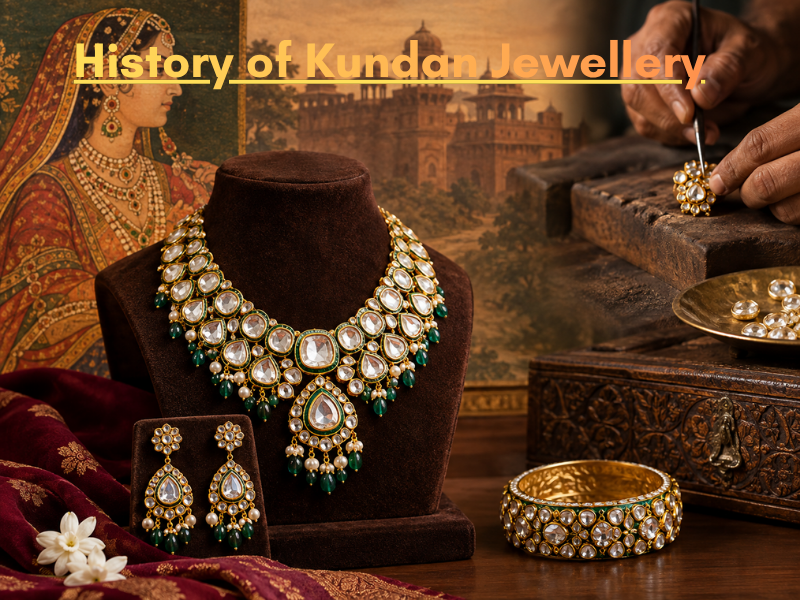
The history of Kundan jewellery in India and is closely with royal ornaments traditions. The craft became particularly prominent in the royal courts of Rajasthan and later flourished in other parts of North India.
The jewellery process technique was traditionally and highly skilled artisans who carefully placed gemstones into a gold setting. Royal families valued Handcraft jewellery because of its detailed craftsmanship, luxurious appearance, and connection with Indian artistic traditions.
Over time, Glass-stone craft moved beyond royal households and became an important part of bridal and festive fashion. It continues to represent Indian culture while adapted to suit modern tastes.
What Is Kundan Processing?
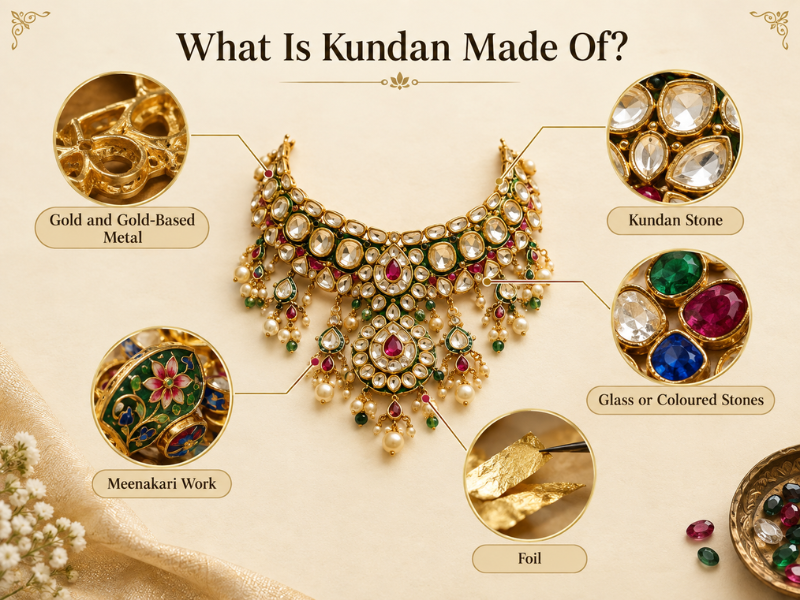
It traditionally made in important materials. The main components include:
Gold or gold-based metal:
Traditionally, gold is to create the base and setting.
Kundan stones:
Carefully cut and polished gemstones are the setting.
Glass or coloured stones:
Some contemporary and affordable Kundan designs may use colourful stones or glass pieces.
Foil:
It’s foil backing used stones to colour and shine.
Meenakari work:
Some Kundan pieces feature colourful enamel work on the reverse side.
The exact materials can vary depending on the design, craftsmanship, and price of the jewellery.
What Is Jadau Jewellery and How Is It Related to Kundan?
Jadau and Royal ornaments are connected, but they are not the same. Jadau jewellery refers to a traditional jewellery-making technique in which gemstones are embedded into a metal base. Kundan work is often used as part of Jadau set.
In simple terms, Kundan generally describes the gemstone-setting technique, while Jadau can refer to the broader style and traditional craftsmanship involving gemstones and detailed settings.
Many traditional bridal pieces combine Jadau craftsmanship with Kundan and Meenakari work. This combination creates jewellery with a rich, detailed, and luxurious appearance.
How Kundan Differs from Polki & Other Gemstones
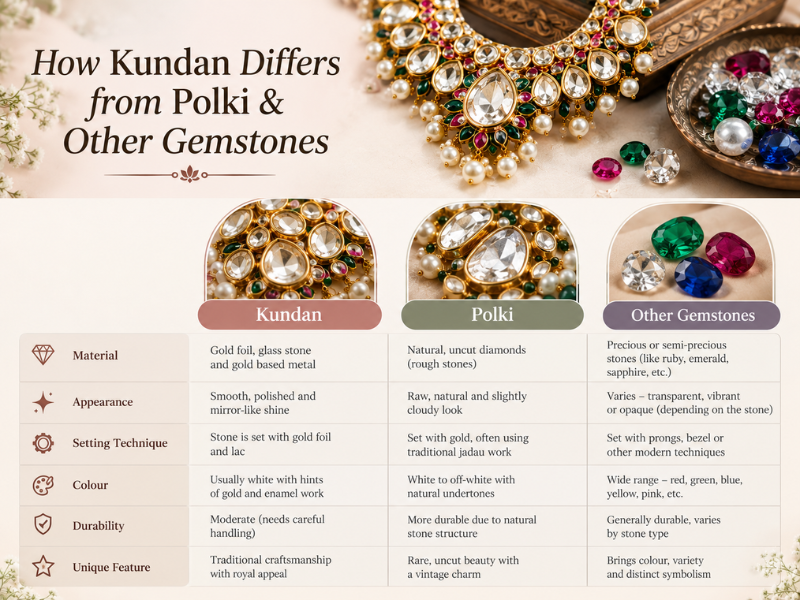
Kundan and Polki craft may look similar at first glance, but there is an important difference between them.
It Royal craft traditionally uses highly polished and carefully shaped stones set into a metal framework. The stones can be coloured or clear, depending on the design.
Polki jewellery, on the other hand, traditionally features uncut diamonds. Polki is known for its natural, slightly uneven appearance and soft diamond sparkle.
Other gemstone jewellery focuses mainly on the type of gemstone used, such as emeralds, rubies, sapphires, or other precious and semi-precious stones.
So, while Kundan, Polki, and gemstone pieces can all have elaborate designs, their stones, setting techniques, and overall appearance can be different.
Why Royalty Favoured Kundan Jewellery
Kundan jewellery became closely associated with royalty because of its luxurious appearance and detailed craftsmanship. Traditional pieces often featured elaborate designs, colourful gemstones, gold settings, and intricate workmanship.
For royal families, jewellery was more than an accessory. It represented status, tradition, wealth, and artistic taste. Kundan’s rich appearance made it suitable for royal occasions and ceremonial clothing.
Even today, Crafted jewellery carries this royal influence. A Kundan necklace or bridal set can instantly add a traditional and luxurious touch to an outfit.
Types of Kundan Jewellery
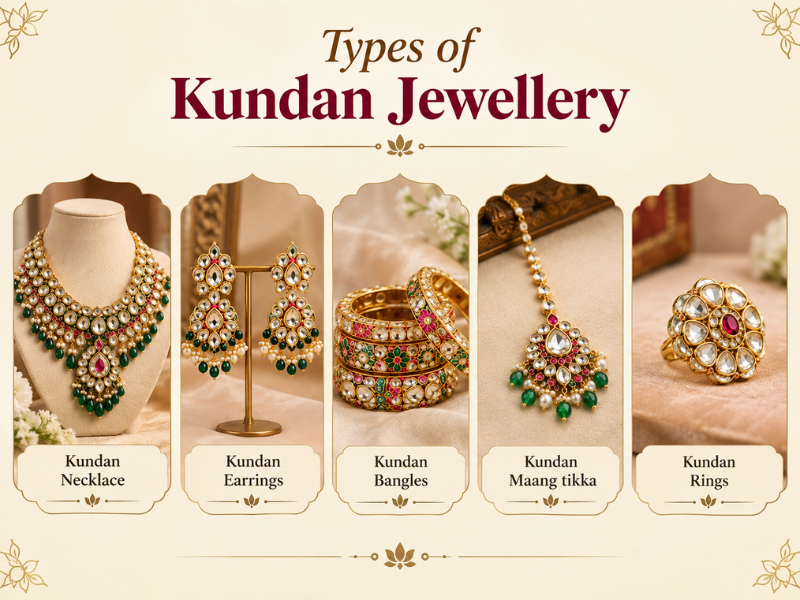
It is available in many forms, making it easy for women to choose pieces according to their style and occasion.
Kundan Necklace
Kundan necklaces are among the most popular choices for weddings and festive occasions. They range from heavy bridal necklaces to lighter designs that can be worn with traditional outfits.
Kundan Earrings
Kundan earrings can feature floral patterns, drops, pearls, gemstones, or traditional motifs. They are suitable for both weddings and festive gatherings.
Kundan Bangles
Kundan bangles combine colourful stones with detailed metalwork. They can be worn individually or stacked with other bangles for a more traditional look.
Kundan Maang Tikka
A Kundan maang tikka is a popular bridal accessory worn on the forehead. It adds a traditional finishing touch to bridal jewellery.
Kundan Rings
Kundan rings are available in simple and statement designs. A detailed Ornaments ring can add an elegant ethnic touch without requiring a complete jewellery set.
Popular Types & Designs in Kundan Jewellery
Traditional Crafts is available in a wide range of patterns and designs. Some popular choices include:
Floral Kundan designs with delicate flower-inspired patterns
Chandbali earrings featuring a traditional crescent shape
Kundan choker necklaces that sit close to the neckline
Long Kundan necklaces for a layered bridal appearance
Kundan and pearl combinations for a soft and elegant look
Kundan Meenakari designs featuring colourful enamel work
Statement Kundan jewellery with larger stones and detailed craftsmanship
Modern Kundan designs may use simpler patterns, smaller stones, and lightweight settings, making them easier to wear with contemporary outfits.
What Is a Kundan Jewellery Set?
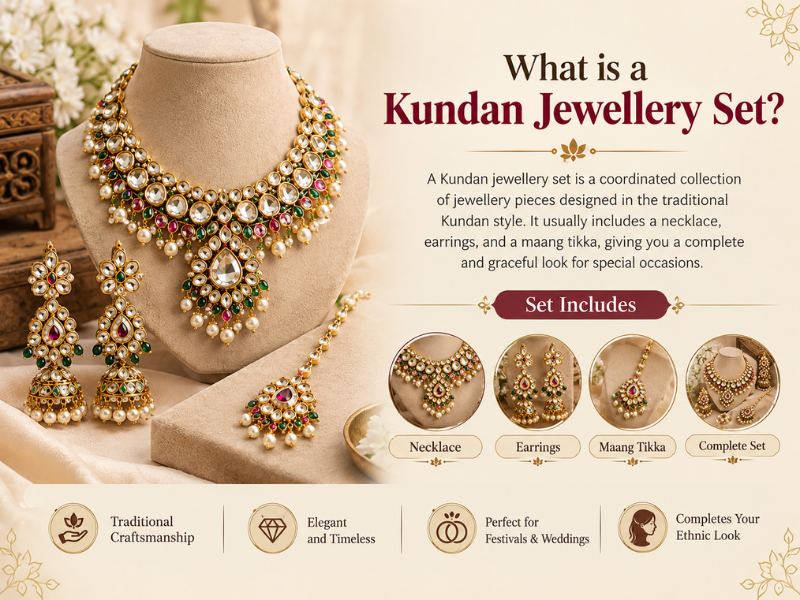
A craft Royal set is a coordinated collection of matching jewellery pieces designed to be worn together. A traditional set may include a Necklace, Earrings, Maang tikka, Bangles, and sometimes a matching Ring.
Bridal Kundan jewellery sets are usually more detailed and elaborate, while lightweight sets can be suitable for festivals, family functions, and parties.
A matching Kundan set can make styling easier because all the pieces share similar colours, patterns, and stonework. Women can wear the complete set for a grand appearance or combine individual pieces with other jewellery for a more personalised look.
Why Kundan Jewellery Is Still Popular
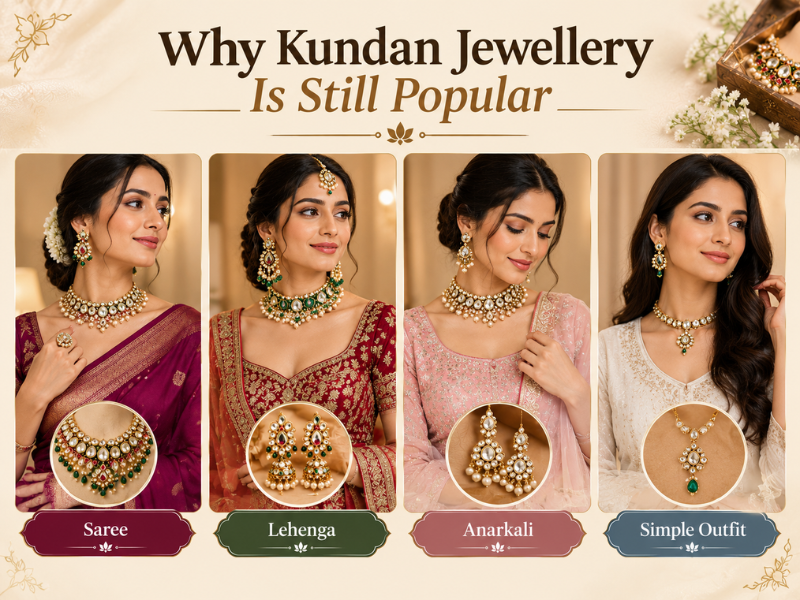
Kundan jewellery remains popular because it combines traditional Indian craftsmanship with timeless beauty. Its detailed designs make even a simple traditional outfit look more special.
Another reason for its popularity is its versatility. Women can choose heavy Royal craft for weddings or lighter designs for festivals, parties, and family celebrations.
Kundan jewellery also works well with different Indian outfits, including sarees, lehengas, Anarkali suits, and salwar suits. Modern designs have made Kundan jewellery even more accessible to younger women who want traditional Ornaments with a contemporary appearance.
Modern-Day Styling Tips for Kundan Jewellery
It’s does not have to be reserved only for weddings. With the right styling, it can be worn for many occasions.
With a saree:
Pair a Kundan necklace with a silk or festive saree for a classic Indian look. Choose earrings that complement the necklace without making the overall look too heavy.
With a lehenga:
A statement Kundan necklace and matching earrings can create an elegant bridal or festive appearance.
With an Anarkali:
Choose a medium-sized Kundan necklace or statement earrings for a balanced traditional look.
With a simple outfit:
Kundan earrings or a statement ring can add a traditional touch without making the outfit look overdressed.
For a modern appearance, avoid wearing too many heavy pieces together. Let one statement jewellery piece become the main focus of your look.
FAQs
Is Kundan jewellery made from real gold?
Traditional Kundan jewellery can be made using gold, but the materials used in modern Kundan jewellery vary. Always check the product details, purity, and hallmark information before purchasing.
Is Kundan jewellery suitable for weddings?
Yes. Kundan jewellery is one of the popular choices for Indian bridal and wedding looks. Its detailed designs work especially well with sarees, lehengas, and other traditional outfits.
What is the difference between Kundan and Polki jewellery?
Kundan generally refers to a gemstone-setting technique, while traditional Polki jewellery uses uncut diamonds. Their appearance and craftsmanship can therefore differ.
Can Kundan jewellery be worn with modern outfits?
Yes. Lightweight Kundan earrings, rings, or necklaces can be styled with Indo-western and even simple contemporary outfits.
How should I care for Kundan jewellery?
Keep Kundan jewellery away from perfumes, water, sweat, and harsh chemicals. Store each piece separately in a soft jewellery box or pouch to prevent scratches and damage.
Is Kundan jewellery only for brides?
No. While Kundan jewellery is very popular among brides, lightweight and modern designs can also be worn for festivals, parties, family functions, and other special occasions.
Why is Kundan jewellery considered traditional Indian jewellery?
Kundan jewellery has a long connection with Indian craftsmanship and royal jewellery traditions. Its detailed stone setting, traditional motifs, and rich appearance have helped it remain an important part of Indian jewellery culture.